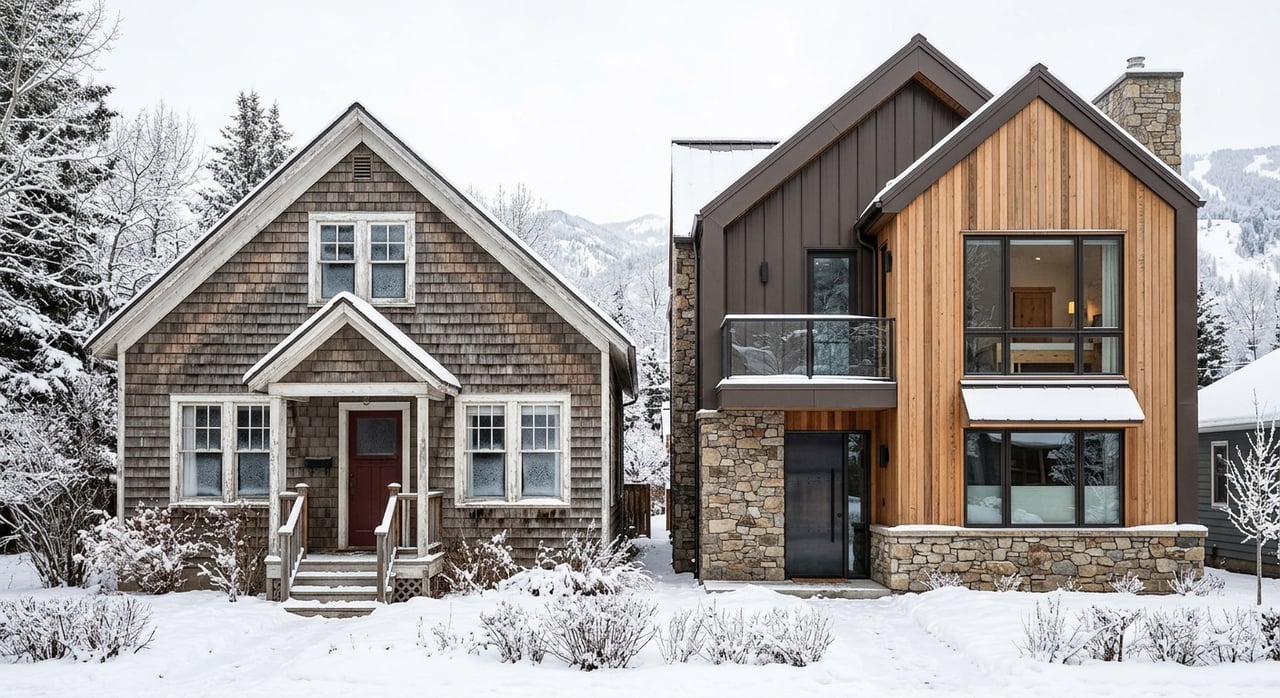
If you picture Old Town Park City, you probably imagine two very different kinds of homes. One is a historic cottage with a front porch, narrow lot, and unmistakable sense of place. The other is a thoughtfully rebuilt home that still fits the street but offers a more modern layout and easier day-to-day living. If you are weighing those options, this guide will help you understand what each path really looks like in Old Town and what tradeoffs matter most before you buy. Let’s dive in.
Why Old Town Feels So Different
Old Town is not just another in-town neighborhood. According to the City of Park City, the area grew out of the late-1860s silver-mining boom, with mining continuing into the early 1970s. The city also identifies more than 400 historic sites and two National Register historic districts, which helps explain why Old Town still feels like a compact historic core rather than a conventional subdivision.
That history shapes the streetscape you see today. Many lots in the historic Park City Survey were originally platted at 25 by 75 feet, and the city’s HRL district standards were designed to preserve historic residential character. In practical terms, that often means narrow parcels, limited setbacks, and less flexibility for garages and parking.
What Historic Charm Really Means
A preserved Old Town home offers something hard to replicate. You get authenticity, walkability, and a streetscape that reflects Park City’s mining-era roots. For many buyers, that character is the whole point of owning in 84060.
But historic charm comes with rules. Park City requires Planning Department design review for all uses in the historic districts and on historic sites outside those districts. Even relatively small exterior changes can trigger a review process meant to keep updates compatible with the surrounding historic context.
Exterior Changes Can Take More Planning
If you buy a historic cottage, you may not be able to update it the same way you would in a newer neighborhood. The city’s review process focuses on whether changes fit the area’s historic character, rather than whether they simply look current or add convenience.
That matters if your wish list includes larger windows, exterior reconfiguration, expanded massing, or a major addition. In Old Town, those goals often need to be balanced against preservation requirements and lot constraints.
Older Lots Create Real Limits
Historic homes can also be more difficult to modernize because many are valid non-complying structures for setbacks, off-street parking, and driveway location under the HR-2 district code. That does not make them less desirable, but it does mean your renovation options may be narrower than you expect.
This is one of the biggest surprises for buyers. A home can feel charming and well located, yet still present real design and permitting challenges if you want to change how it lives.
Preservation Incentives May Help
For some eligible Significant or Landmark Historic Sites, the city’s Historic District Grant Program offers a 50% matching grant for preservation, rehabilitation, or restoration work. Eligible improvements can include windows, roofs, masonry, exterior paint, insulation, electrical and mechanical upgrades, and restoration of porches or other features.
That said, new additions are not eligible. So while the program can support preservation-focused ownership, it is not a shortcut for expanding the home.
What New-Build Convenience Looks Like
If you prefer updated systems, more functional layouts, or off-street parking solutions, a newer home or approved rebuild in Old Town may feel like a better fit. You can often gain a more practical site plan and a smoother day-to-day experience.
Still, “new build” in Old Town does not mean a blank slate. Park City’s historic residential code requires new construction and infill to be compatible with surrounding buildings in massing, height, width, and character. Larger building mass is generally expected to sit farther toward the rear of the lot to reduce its visual impact.
Context Matters More Than Size
That means a newer Old Town home is usually a contextual rebuild, not a suburban-style replacement. You may get modern comforts, but the home is still expected to respect the scale and rhythm of the street.
For buyers, that is an important mindset shift. Newer homes here can be more convenient, but they are still part of a tightly managed historic setting.
Parking Rules Shape Design
Parking is one of the clearest differences between historic charm and newer convenience. The city’s HR-1 parking rules allow options like tandem parking, shared driveways on shared side or rear lot lines, and common parking structures when they reduce street-facing garage doors.
The code also encourages development that minimizes new driveways and reduces the visibility of parking areas. So even if a newer home offers a garage or better off-street parking, that convenience is often carefully integrated rather than prominently displayed.
Some Projects Need Extra Review
On certain designated Significant or Landmark single-family sites, Park City requires an Administrative Conditional Use Permit before a project can move forward. That adds another layer of review for some redevelopment plans.
If you are shopping for a newer home or considering a future rebuild, it helps to understand that convenience in Old Town still comes through a regulated approval process. The upside is a more cohesive neighborhood character. The tradeoff is less flexibility than you might find elsewhere.
Daily Life Tradeoffs to Expect
In Old Town, lifestyle and logistics are closely linked. The same narrow streets and historic scale that make the area memorable can also make ownership more complex.
The city says its historic-district parking management program was created because the district is narrow, steep, lacks sidewalks, has limited on-street parking, and sits close to major attractions. The same city FAQ notes that parking without a residential permit is prohibited, and generally up to five resident permits may be available per address, with off-street spaces deducted from that total.
Walkability and Ski Access Are Major Upsides
For many buyers, the payoff is worth it. If you are near Main Street, Town Lift serves as a direct starting point for your ski day, connecting to the bottom of Bonanza Express and onward into Park City Mountain terrain.
That kind of access is a major reason Old Town continues to attract second-home buyers and lifestyle-driven purchasers. You may give up some parking ease or lot efficiency, but you gain a location that feels deeply tied to the mountain and Main Street.
Which Buyer Type Fits Best?
Your best choice usually comes down to how you live, what you value, and how much flexibility you want after closing.
Historic-Charm Buyer
You may fit this profile if you want authenticity, walkability, and a preserved streetscape. You likely appreciate original character and are comfortable with older systems, tighter parking, and formal design review for exterior changes.
Convenience Buyer
You may lean this way if you want a garage or another off-street parking solution, a more functional floor plan, and fewer compromises in daily use. You still need to accept Old Town’s design constraints, but a newer or rebuilt home may align better with how you actually live.
Hybrid Buyer
You may be a hybrid buyer if you love the feel of an older home but want to renovate over time. Before you tour seriously, it is smart to verify the home’s historic designation, prior approvals, non-complying status, resident-permit eligibility, Wildland Urban Interface triggers, and proximity to Main Street or Town Lift.
Don’t Overlook WUI Requirements
Whether you buy older or newer, safety-related code can affect your plans. Park City says its Wildland Urban Interface code applies to all new construction and additions, plus remodels valued at more than $50,000.
That means a landscape and home-hardening plan may be reviewed as part of the building-permit process. If renovation is part of your ownership strategy, this is another reason to understand the property’s constraints before you commit.
The Bottom Line in Old Town
Old Town Park City is compelling because it does not offer an easy, one-size-fits-all answer. Historic homes can deliver unmatched character and a true sense of place, while newer homes can offer more comfort and easier function within the same walkable, mountain-connected setting.
The key is knowing which compromises you are willing to make. If you want help evaluating historic designation, parking realities, redevelopment potential, or how a property fits your lifestyle goals, Selling the Slopes brings local insight and renovation-minded perspective to every step of the process.
FAQs
What makes Old Town Park City homes feel different from newer neighborhoods?
- Old Town homes reflect Park City’s mining-era development pattern, with many narrow lots, preserved historic sites, and design rules intended to maintain the area’s historic character.
What should you know before buying a historic home in Old Town Park City?
- You should confirm whether the home is in a historic district or on a historic site, because exterior changes may require Planning Department design review and lot constraints can limit updates.
What does new-build convenience mean in Old Town Park City?
- In Old Town, new-build convenience usually means a carefully approved infill home or contextual rebuild with newer systems and improved function, not a standard suburban-style house.
How does parking work for Old Town Park City properties?
- Parking can be limited because the district is narrow and steep, and resident permits are generally capped per address with off-street spaces deducted from the total.
What renovation rules can affect Old Town Park City buyers?
- Buyers should review historic-design standards, non-complying site conditions, possible permit requirements, and Wildland Urban Interface rules that can apply to additions and larger remodels.
Why do many buyers still choose Old Town Park City despite the tradeoffs?
- Many buyers value the area’s walkability, preserved streetscape, proximity to Main Street, and access to Town Lift, which create a distinctive Park City lifestyle.